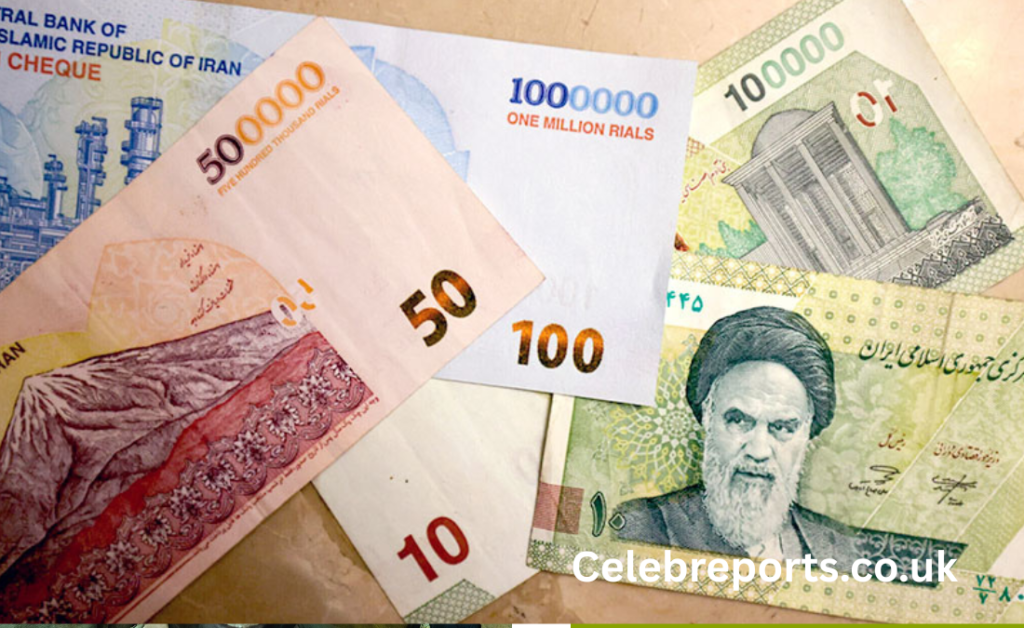

Iran’s currency has become one of the clearest symbols of the country’s economic pressure. In October 2026, the Iranian rial reached another record low against the U.S. dollar, raising fresh questions about its history, value and future.
What Is the Currency of Iran?
The official currency of Iran is the Iranian rial, commonly abbreviated as IRR. It is issued and managed by Iran’s central banking system.
The rial has been Iran’s official monetary unit for decades, but everyday prices inside the country can be confusing to outsiders because Iranians commonly use another unit in conversation: the toman.
One toman is traditionally equal to 10 rials. This does not mean the rial has been officially replaced by the toman in everyday legal currency. Instead, the toman is widely used as a practical pricing unit.
That distinction matters when reading reports about Iran’s currency. A price described as thousands of tomans can represent a much larger number when converted into rials.
Why Does Iran Have a Rial and a Toman?
The answer is partly historical and partly practical.
As the rial lost purchasing power over many years, using large numbers became increasingly common. Consumers and businesses therefore frequently began expressing prices in tomans, with one toman representing 10 rials.
This can create confusion for people comparing Iranian prices or exchange rates internationally.
There is no mystery behind the arithmetic: 10 rials equals 1 toman in the commonly used system. Claims suggesting that the toman is simply a completely separate foreign currency are incorrect.
The Rial’s Long History of Exchange-Rate Problems
Iran’s exchange-rate system has gone through several major changes.
According to International Monetary Fund records, Iran historically operated with multiple exchange rates and extensive foreign-exchange controls. In the early 1990s, authorities attempted to simplify the system, but the country returned to multiple exchange rates after economic pressures increased.
A major change came in March 2002, when Iran unified its remaining official exchange rates and moved toward a market-based managed floating system. IMF documentation confirms that this represented an important restructuring of the country’s foreign-exchange regime.
The history shows that the rial’s weakness is not a sudden development. It has been connected to inflation, foreign-exchange restrictions, economic shocks and political pressures over several decades.
What Happened to the Rial in 2026?
The latest figures show just how severe the pressure has become.
On October 3, 2026, Reuters reported that the rial was trading at around 2.688 million rials per U.S. dollar in Iran’s free market, compared with approximately 2.632 million the previous day. Another local exchange-rate tracker cited by Reuters put the figure around 2.695 million.
Reuters also reported that the rial had lost more than half of its value over the previous year.
The Central Bank of Iran responded by announcing that state banks would sell up to $2 billion in foreign currency in an effort to support the rial.
These numbers refer to the free-market environment. Iran has historically maintained different exchange-rate mechanisms, so simply searching for one “official rial-to-dollar rate” can give a misleading picture of what people actually pay in the market.
Why Is the Iranian Rial So Weak?
Several forces are involved.
International sanctions have restricted Iran’s access to parts of the global financial system and complicated trade and foreign-currency flows. Political uncertainty has also affected confidence in the currency.
Inflation is another major factor. Reuters reported in October 2026 that Iran was experiencing inflation above 70%, putting additional pressure on household purchasing power.
When people expect a currency to lose value, they may try to move savings into assets they believe will hold their value better. Reuters reported that some Iranians were turning to U.S. dollars, other foreign currencies and gold as alternatives to the rial.
The result can become a difficult cycle: weaker confidence increases demand for foreign currencies, while increased demand can put further pressure on the domestic currency.
Does a Weak Rial Mean Iran Has No Economy?
Not necessarily.
A currency’s exchange rate alone does not measure the complete strength of a national economy. Iran remains a major oil-producing country with a large domestic population and substantial industrial and natural resources.
The more immediate issue is purchasing power.
For ordinary households, rapid depreciation can make imported goods, rent and other necessities more difficult to afford. Reuters reported that the currency crisis was already making basic living costs increasingly difficult for many citizens in 2026.
Is the Rial Being Replaced by the Toman?
This is another area where headlines can create confusion.
The toman is widely used in everyday Iranian commerce, but that does not automatically mean that every reference to the toman represents a completed replacement of the rial.
Any claim that Iran has completely abandoned the rial should therefore be treated carefully unless supported by an official monetary reform announcement.
The longstanding 10-to-1 relationship between the two units explains why Iranian prices can appear different depending on whether they are quoted in rials or tomans.
What Happens Next?
The central question is whether Iran can restore confidence in the rial.
The immediate challenge is not simply changing a banknote or renaming the currency. Stabilizing a currency generally requires controlling inflation, improving confidence, maintaining foreign-exchange access and addressing the economic pressures that cause people to move savings into harder assets.
Iranian central-bank officials have argued that the latest decline is temporary and have blamed outside pressure and negative forecasts for contributing to the fall. Reuters reported those comments alongside the announcement of the central bank’s dollar-support measures.
No reliable evidence can establish that one single factor caused the rial’s latest decline. The available record points instead to a combination of economic, political and external pressures.
The Real Story Behind Iran’s Currency
The mystery surrounding Iran’s currency becomes clearer when its history is examined.
The rial remains Iran’s official currency, while the toman remains deeply embedded in everyday price discussions. Decades of exchange-rate changes, inflation and economic restrictions have progressively weakened the rial’s international value.
As of October 2026, the latest reported free-market rate shows the currency under extraordinary pressure. Whether that becomes another temporary crisis or part of a longer-term monetary transformation will depend on Iran’s ability to restore economic stability and public confidence.
Author Bio:
Daniel Morgan is a journalist specializing in international economics, currencies and human-interest stories. His reporting focuses on explaining complicated financial developments through verified records, historical context and accessible analysis.


