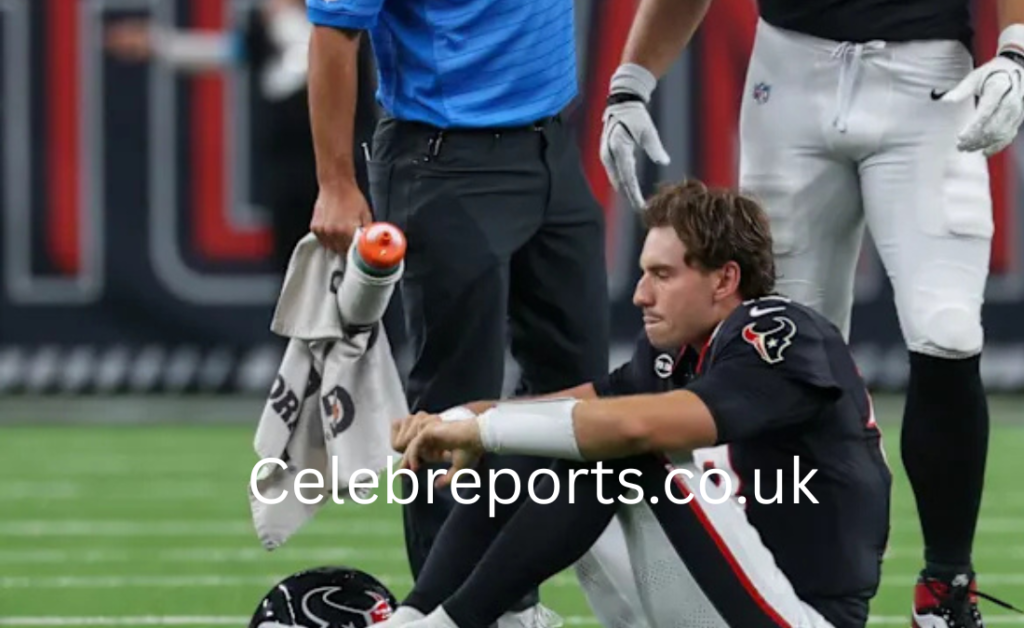

The Los Angeles Chargers and Houston Texans met at NRG Stadium on August 13, 2026, in a preseason matchup that changed dramatically after halftime. Houston led 7–3 after the opening quarter, but Los Angeles responded with 24 unanswered points to finish 27–7.
The final score tells only part of the story. The player statistics show how the Chargers gradually took control.
The Quarter-by-Quarter Turning Point
Houston opened the game with a touchdown from Davis Mills to Jared Wayne. Los Angeles answered with a field goal, leaving the Texans ahead 7–3 after the first quarter.
The Chargers then scored in every remaining quarter. Amar Johnson provided the first touchdown, Cameron Dicker added a field goal, and Los Angeles scored twice more in the fourth quarter.
The official game data records the Chargers finishing with 379 total yards compared with Houston’s 209.
Trey Lance’s Passing Numbers
Trey Lance started at quarterback for the Chargers and completed 12 of 20 passes for 164 yards.
He did not throw a touchdown and was intercepted once. Lance also contributed 27 rushing yards on three attempts, including a 15-yard run.
The numbers show that his contribution was not limited to passing. His rushing production added another dimension to the Chargers’ offense.
DJ Uiagalelei Makes an Impact
DJ Uiagalelei also saw action at quarterback for Los Angeles.
He completed six of nine passes for 120 yards and threw one touchdown without an interception. His passer rating in the game was listed at 146.8 by Yahoo Sports.
His fourth-quarter touchdown pass to Devonte Ross helped extend the Chargers’ lead.
Amar Johnson’s Two-Touchdown Night
One of the clearest statistical stories came from running back Amar Johnson.
Johnson carried the ball six times for 17 yards and scored two rushing touchdowns. His longest run was seven yards.
He also caught two passes for 68 yards, including a 55-yard reception. That gave him 85 yards from scrimmage and made his involvement one of the more notable individual performances of the game.
The Chargers’ Receiving Leaders
The Chargers spread their passing production among several players.
KeAndre Lambert-Smith led the team in receptions with four, producing 58 receiving yards. Johnny Pascuzzi added three catches for 39 yards.
Amar Johnson’s two catches produced the team’s longest reception of the game, a 55-yard play. Dalevon Campbell also recorded a 32-yard reception, although he lost a fumble on that play later in the game.
Houston’s Quarterback Numbers
Houston used Davis Mills and Graham Mertz at quarterback.
Mills completed nine of 15 passes for 82 yards and one touchdown without an interception. His touchdown pass went to Jared Wayne for five yards in the opening quarter.
Mertz completed four of seven passes for 23 yards and added 15 rushing yards on three attempts.
Jared Wayne Provides Houston’s Early Highlight
Jared Wayne caught three passes for 17 yards and scored Houston’s only touchdown.
His five-yard touchdown reception from Mills gave the Texans their early 7–3 advantage. After that score, however, Houston did not find the end zone again.
The Texans finished with 209 total yards, compared with 379 for Los Angeles.
Houston’s Rushing Attack
Noah Whittington led the Texans in rushing attempts and yards.
He carried 13 times for 40 yards, averaging 3.1 yards per attempt. Joshua Pitsenberger added 33 yards on nine carries, while Mertz contributed 15 rushing yards.
As a team, Houston’s rushing production was unable to match the Chargers’ overall offensive output.
What the Team Statistics Reveal
The biggest difference was total yardage.
Los Angeles produced 379 yards on 60 offensive plays, while Houston recorded 209 yards on 52 plays. The Chargers also held the ball for 32:15 compared with Houston’s 27:45.
Turnovers were another part of the statistical picture. Los Angeles committed two turnovers, while Houston committed one, meaning the final margin cannot simply be explained by turnover advantage.
Instead, the yardage and second-half scoring show how the game moved away from Houston after the opening period.
The Defensive Side of the Box Score
The Chargers’ defensive effort became increasingly important as the game progressed.
Houston scored its only touchdown in the first quarter and was held scoreless during the final three quarters. Los Angeles’ defense therefore prevented the Texans from turning their early advantage into sustained offensive production.
For a preseason game featuring numerous substitutions, that fourth-quarter shutout is an important part of the final statistical picture.
The Final Numbers
The 27–7 score reflected a game that changed direction after the opening quarter.
Houston started with a seven-point lead, but Los Angeles controlled the remainder of the contest. The Chargers finished with 379 total yards, scored three touchdowns and added two field goals, while Houston managed 209 total yards and one touchdown.
The player statistics provide the clearest explanation. Lance and Uiagalelei combined for 284 passing yards, while Johnson supplied two rushing touchdowns and 68 receiving yards.
For Houston, Mills produced the only passing touchdown, while Wayne supplied the lone touchdown reception.
Author Bio
James Carter is a journalist covering sports, entertainment and human-interest stories. His work focuses on verified statistics, game records and the stories behind major sporting events.